
Field photos
Eight times someone reached for their camera.
A potato thriving in a glass of water. Two lilac bushes a few inches apart. A lawn that came in twice as fast as the bag said it would. A Christmas cactus that had not flowered in fifty years.
None of these is a trial. Every one of them is a photograph of something somebody saw, sent in by the person who saw it.
How to read this page. These are anecdotes. No controls, no randomisation, no blinding, and in most cases a single plant or a single plot. Weather, soil, timing and simple luck could account for any one of them. We publish them because they are what the people using this water actually observed, with the photographs they took, and because a reader is entitled to see the informal record alongside the formal one. The studies with designs and evidence grades are on the evidence page. This is not that.
Two glasses, two fates
In one glass, a potato rotted. In the other, it grew.
Two potatoes were placed in identical glasses. One glass held ordinary tap water. The other held water treated with a Themarox-derived mineral solution. No soil, no fertilizer, no nutrient program, no biological system beyond the potato itself. The glasses were left undisturbed for weeks.
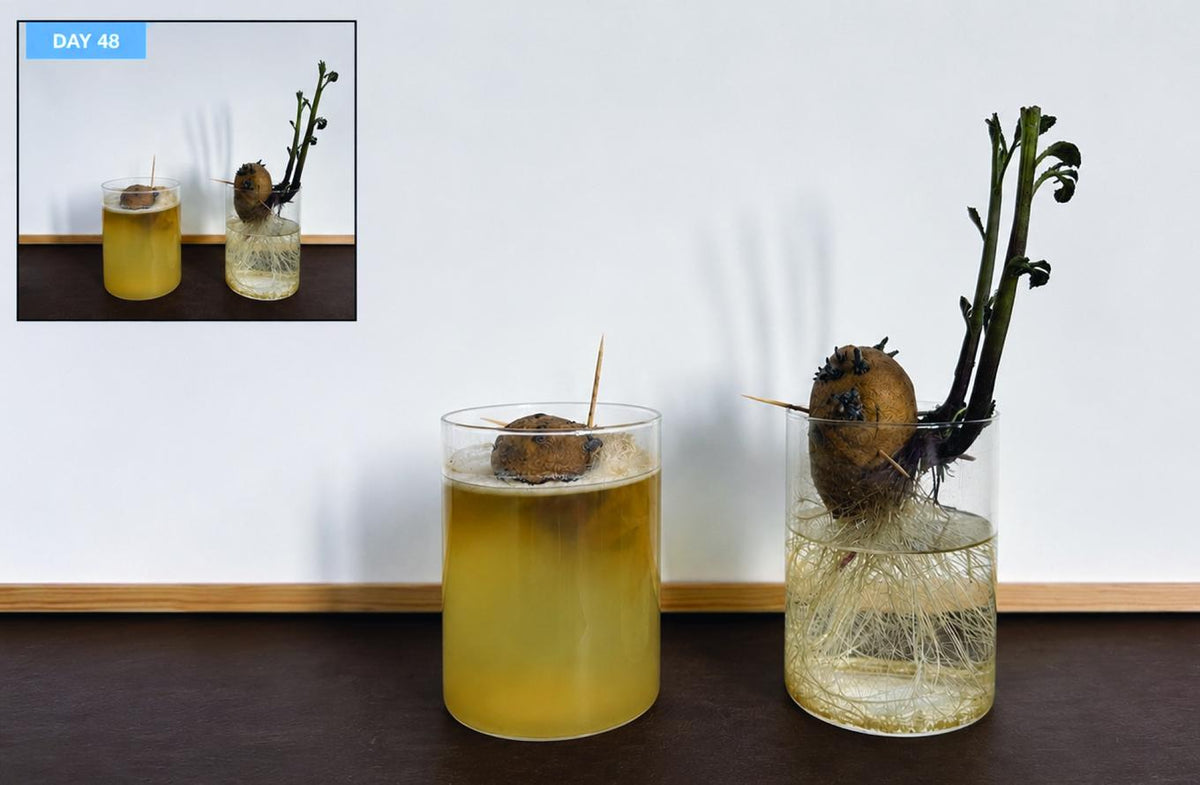
In the tap water the result followed the expected path: clouding, foul odour, tissue softening, breakdown, decay. In the treated water the system behaved differently. The water stayed clearer. The potato held its form. Roots developed into a dense mesh and a green shoot came up.
Two potatoes, the same carbon in each, and only the water deciding whether it slid toward rot or held together as something alive.
The accidental lilac
An accidental experiment cannot be staged. That is what makes it worth recording.
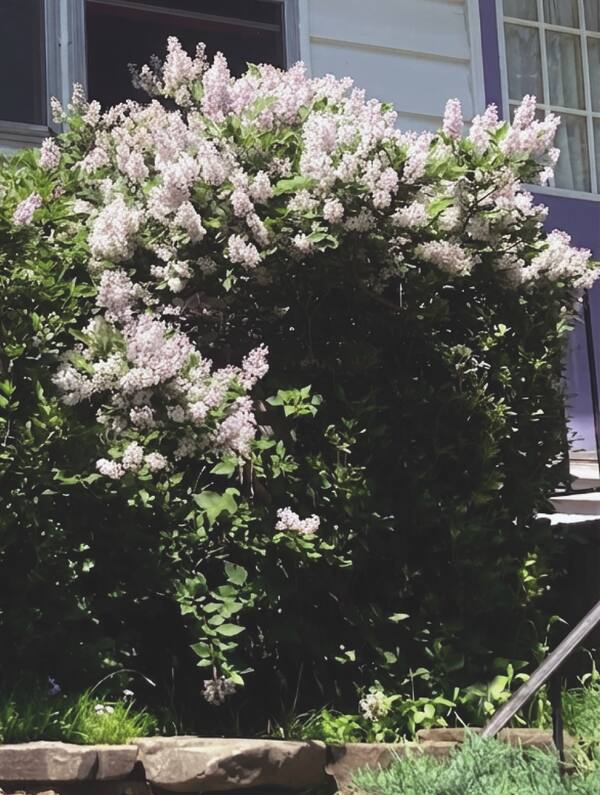
Two lilac bushes stand side by side in front of his house, close enough that their branches touch. He sprayed them from the front walk with treated water, and because of the angle he was spraying from, the bush on the right took most of it while the bush on the left caught little more than the overspray.
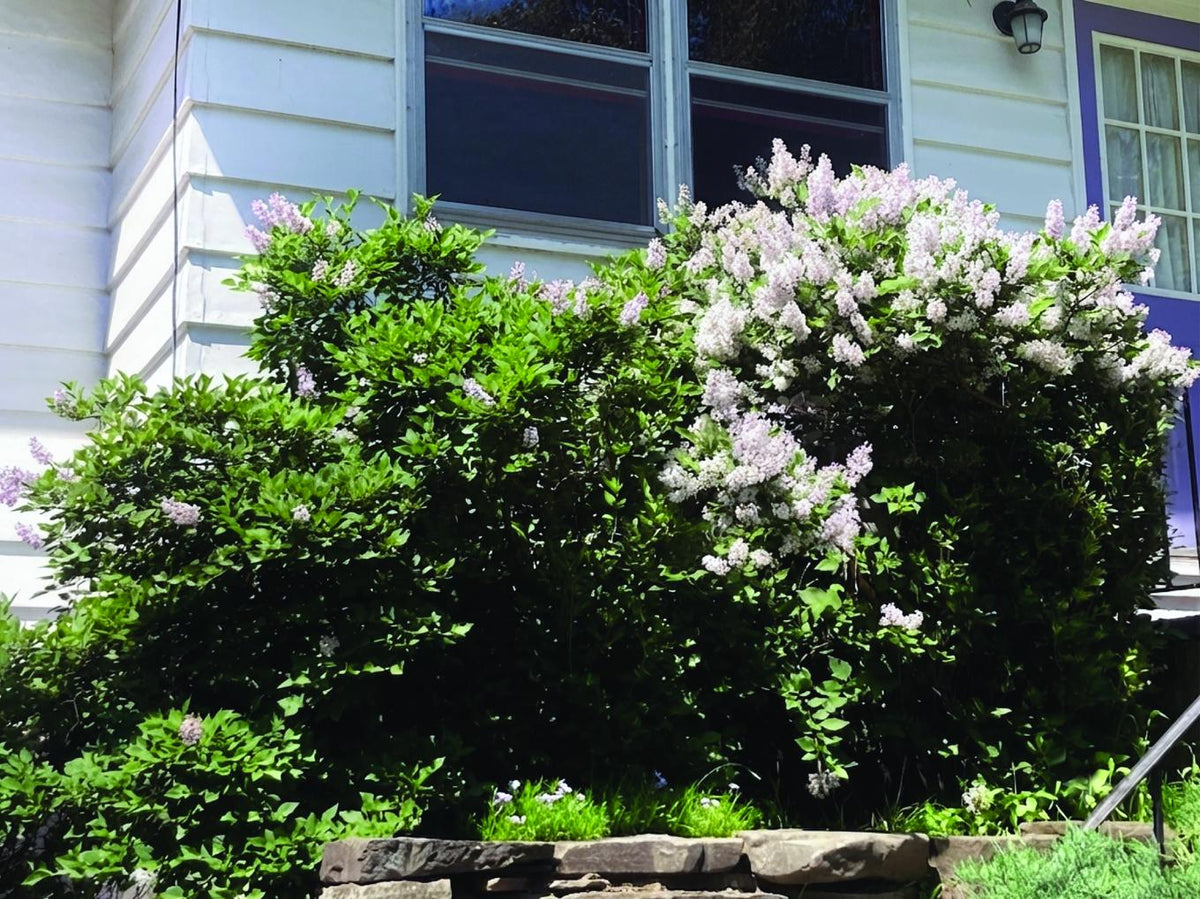
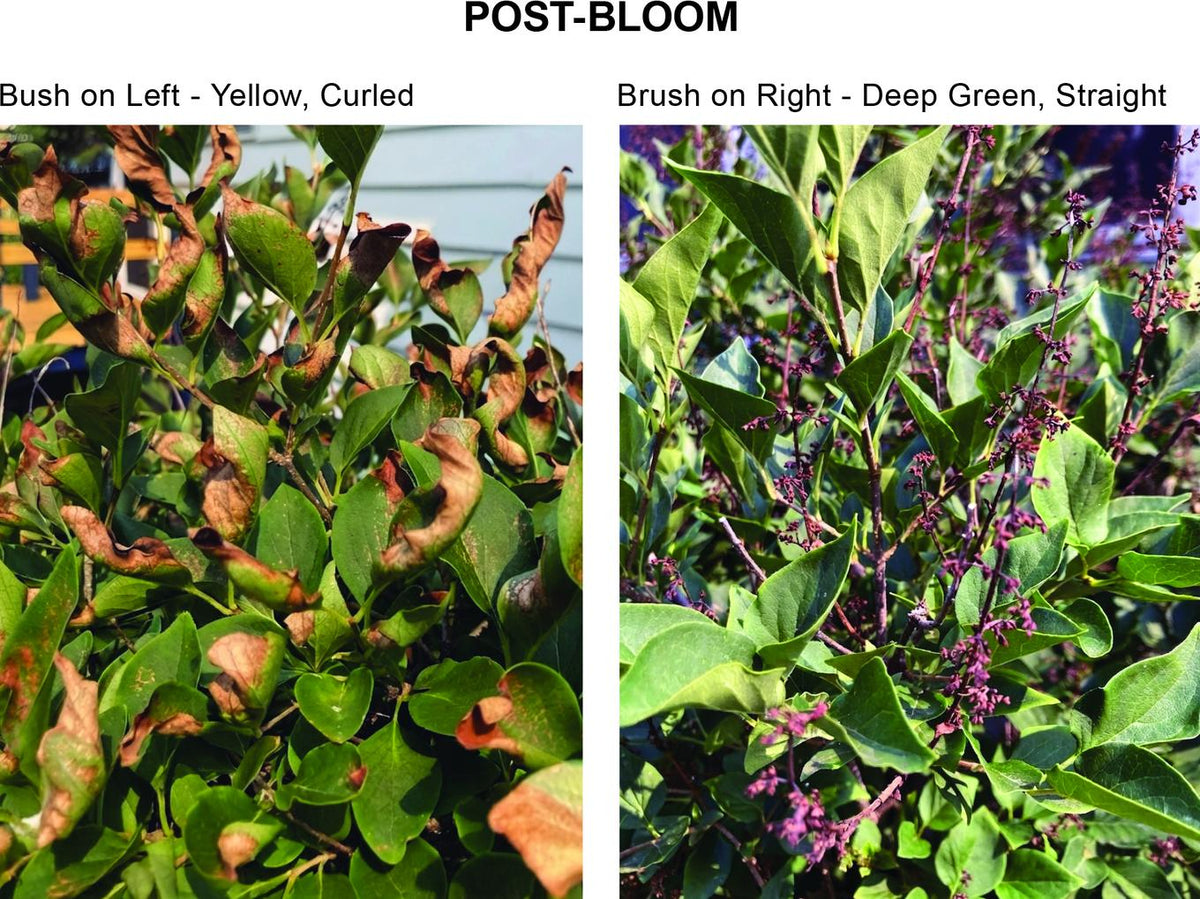
Weeks later, with the flowers gone, the difference had not gone with them. On the left the leaf tips were yellow and curled. On the right they were deep green and straight.
The basil plant race
These photographs were taken eighteen days apart. Nothing changed between them except the water.
Two established basil plants, grown side by side under matched conditions: same soil, same light, same fertilizer, same watering volume and schedule. Both received filtered well water. One of the two was treated with a biotite-derived sulfated mineral solution. Beyond what both plants already got from the soil and from Miracle-Gro, no meaningful amount of mineral nutrient was added.
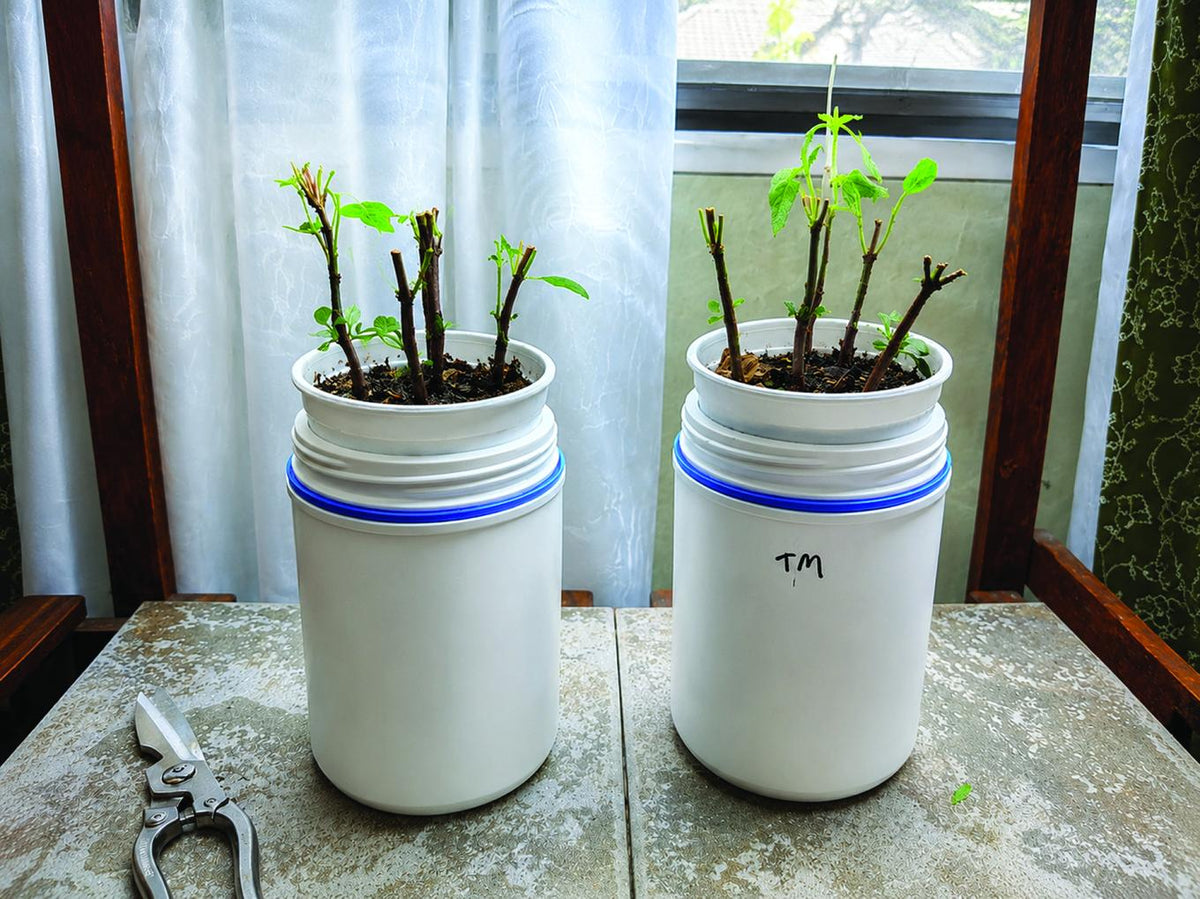
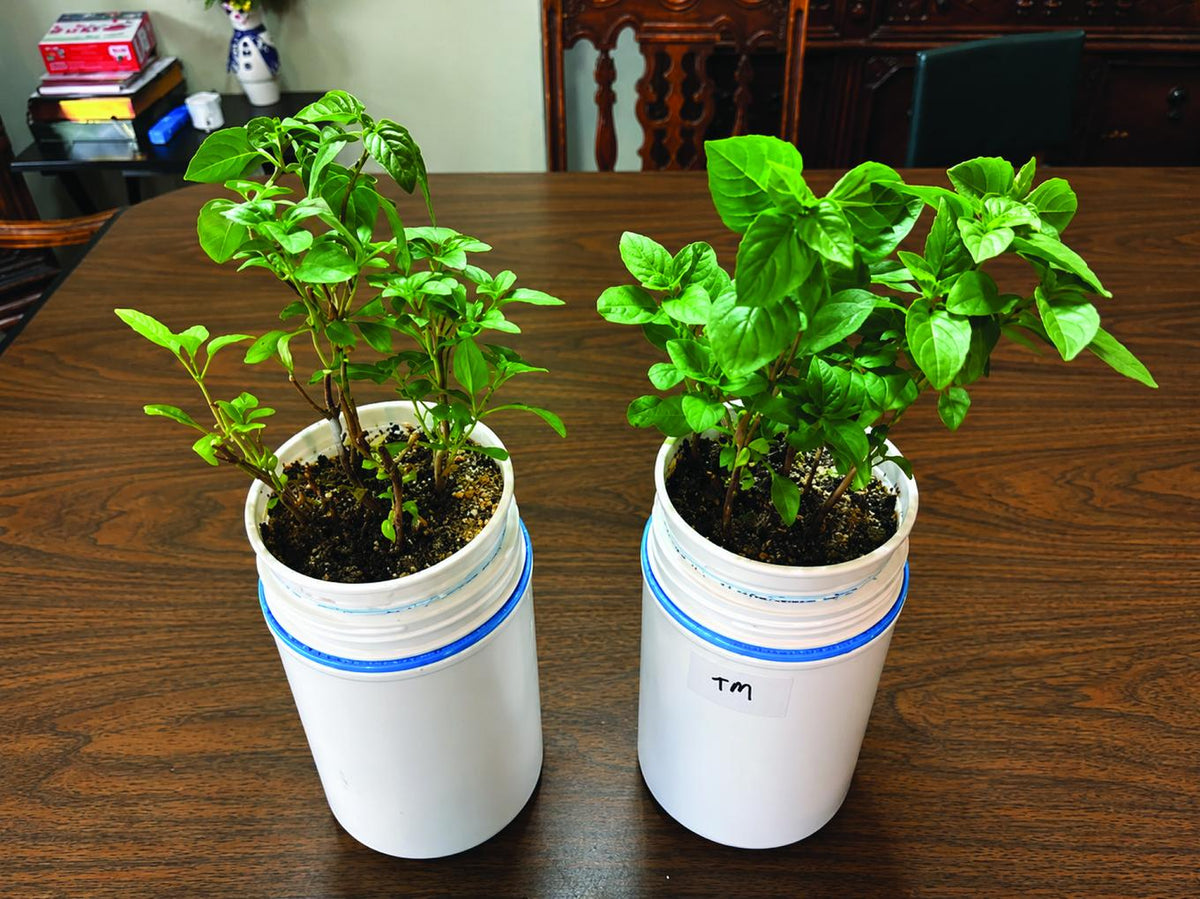
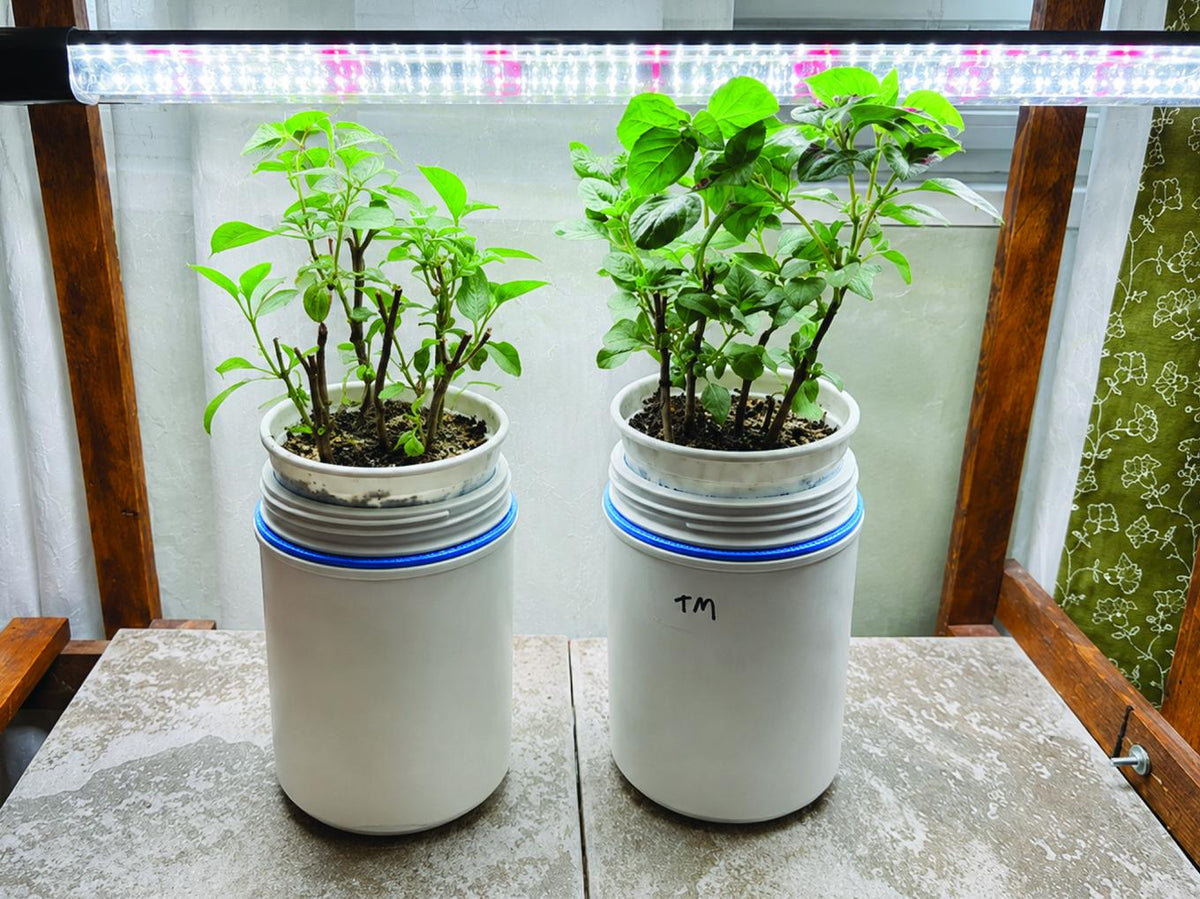
Eighteen days later the plants had diverged. The treated one grew faster, greener, denser and stiffer — as though the minerals already in the soil had simply become easier to reach.
A lawn blasts off
She did not design an experiment. She planted a lawn and watched what happened.
In March the lawn was bare. She seeded it in sections between 29 April and 2 May, sprayed twice in the first few days, then again at about a week.
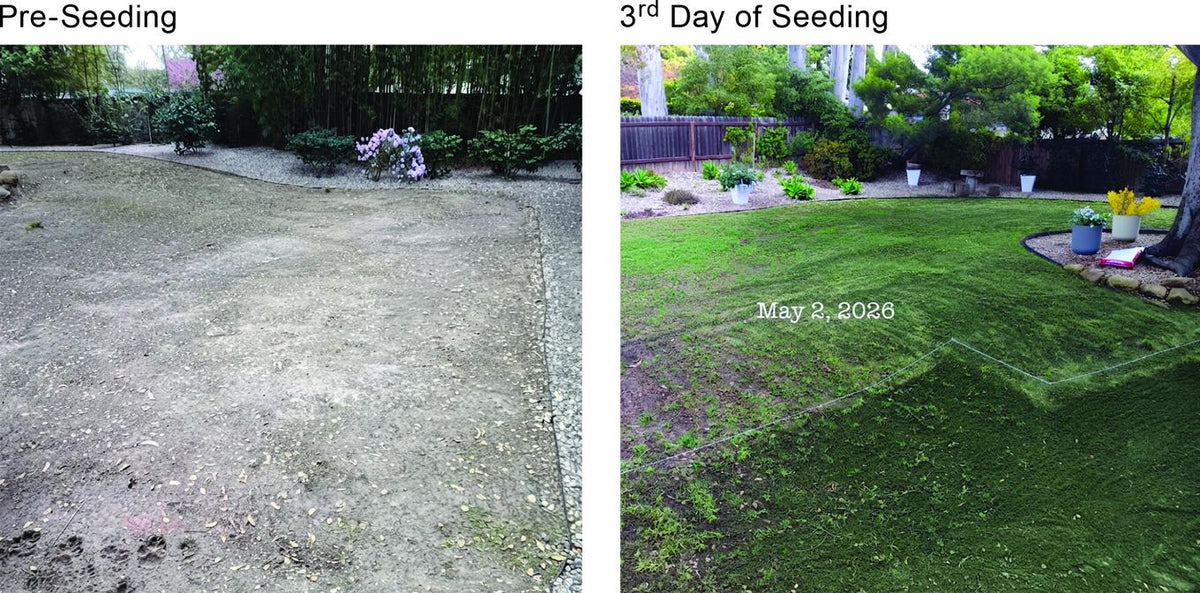
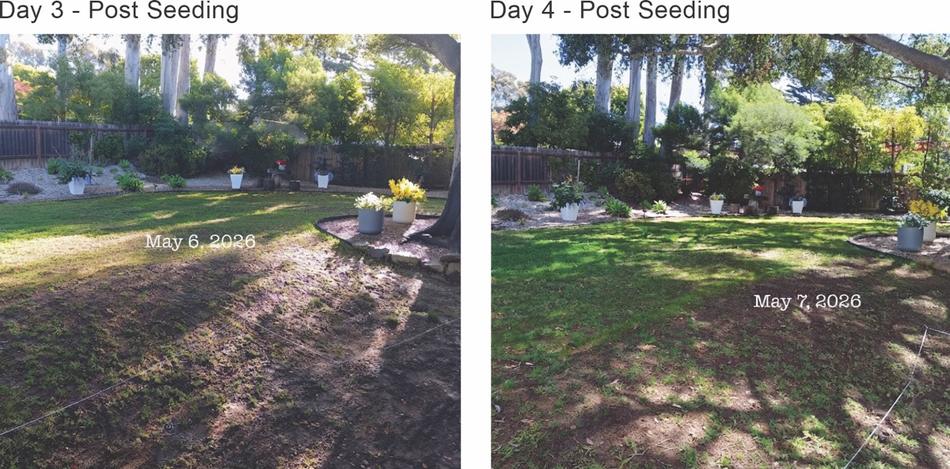
Every morning, she said, she would get up, have a coffee, and watch the lawn grow.
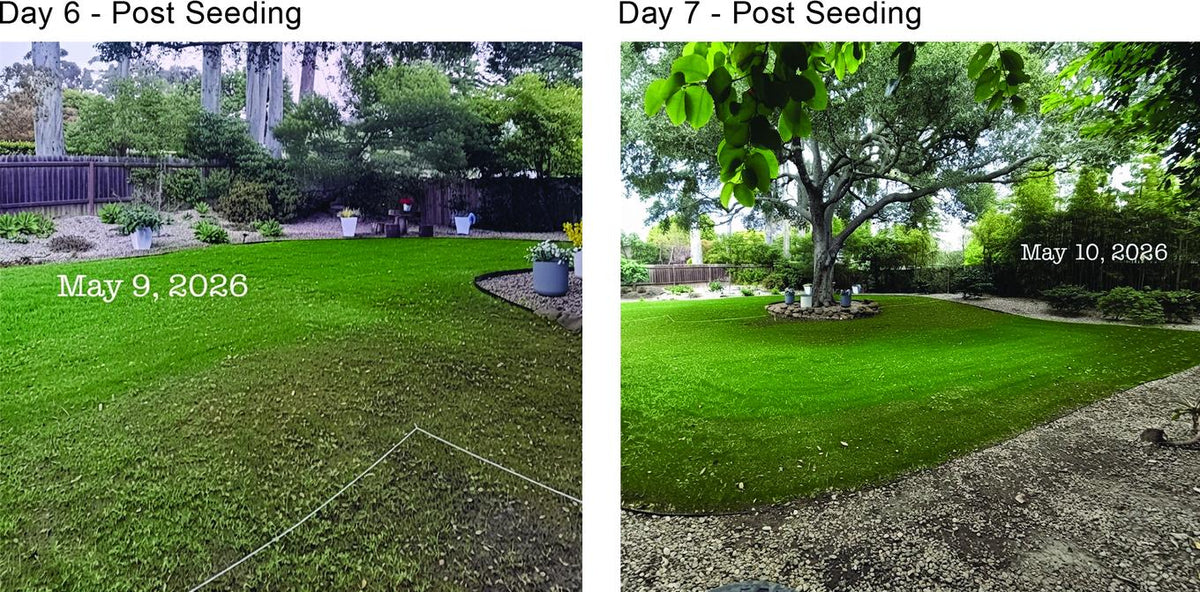
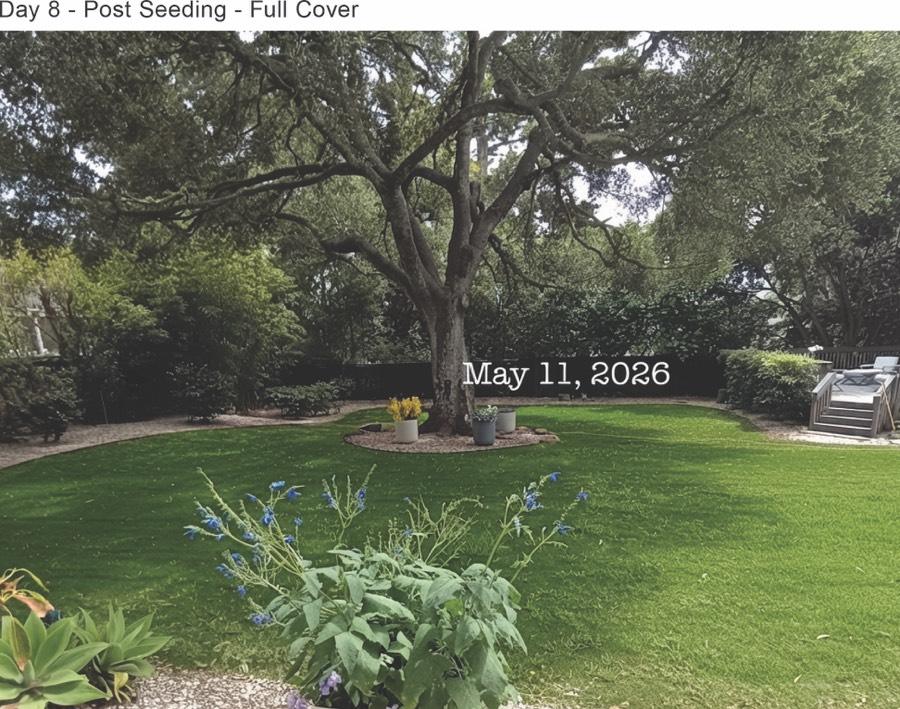
Within eight days the seeded area was covered in green grass. The instructions on the seed bag gave 14 to 21 days — a difference in speed that lines up with a good deal of what Shimanishi and other agronomists reported.
A cactus sleeps for fifty years
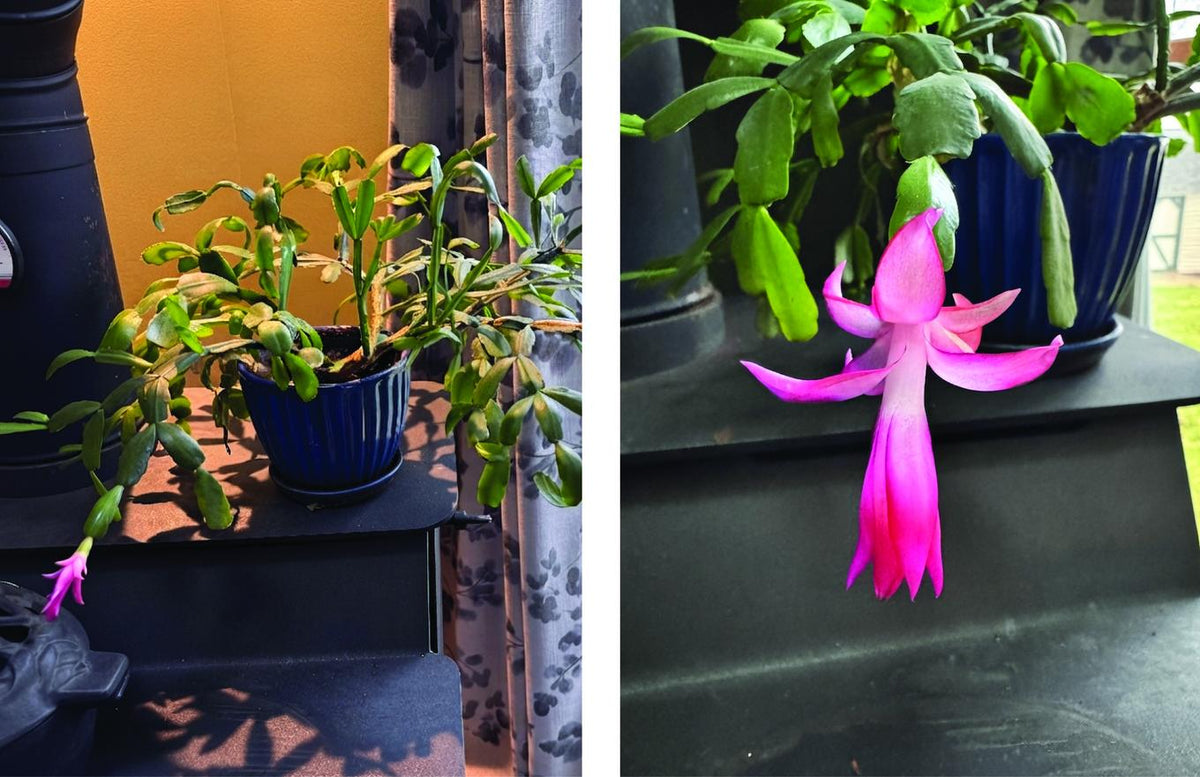
The plant in question had a history.
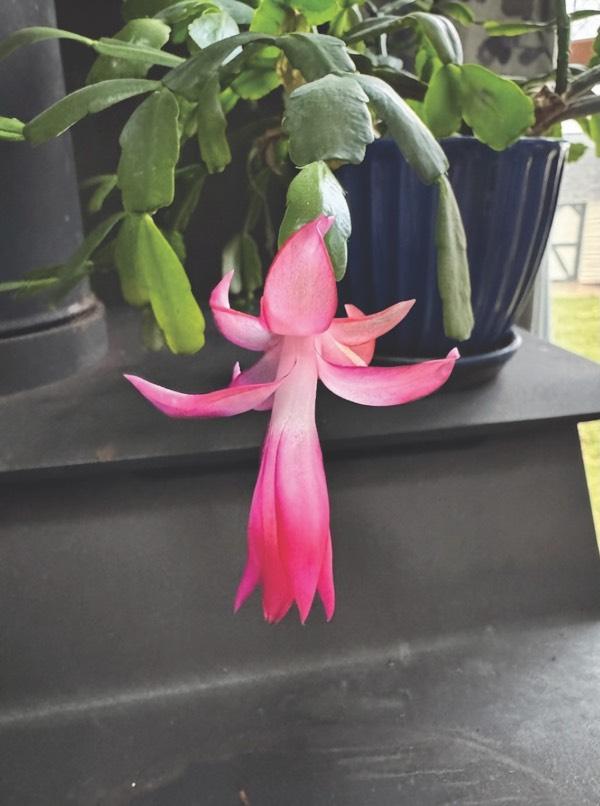
“A Christmas cactus that once belonged to my grandmother. Our family believes this cactus has been with us for roughly forty to fifty years, and in all that time none of us can remember seeing it bloom. After I began consistently watering it with diluted Themarox-treated water, something remarkable happened. For the first time in decades, the old family Christmas cactus produced a healthy, vibrant bloom. It was a small flower, but a big moment for our family, because this plant is one of the last living connections we have to my grandmother. I can’t claim this proves cause and effect, but the timing was striking. After decades of silence, the plant responded soon after I started using this kind of treated water.”
Brent Hanson
Seven doves in the middle of winter
Neither the doves nor the cat proves anything. Both raise the same question.
She filled a water bowl with treated water and set it on the porch rail. Two days later, in the middle of January, seven doves were gathered around it, drinking.
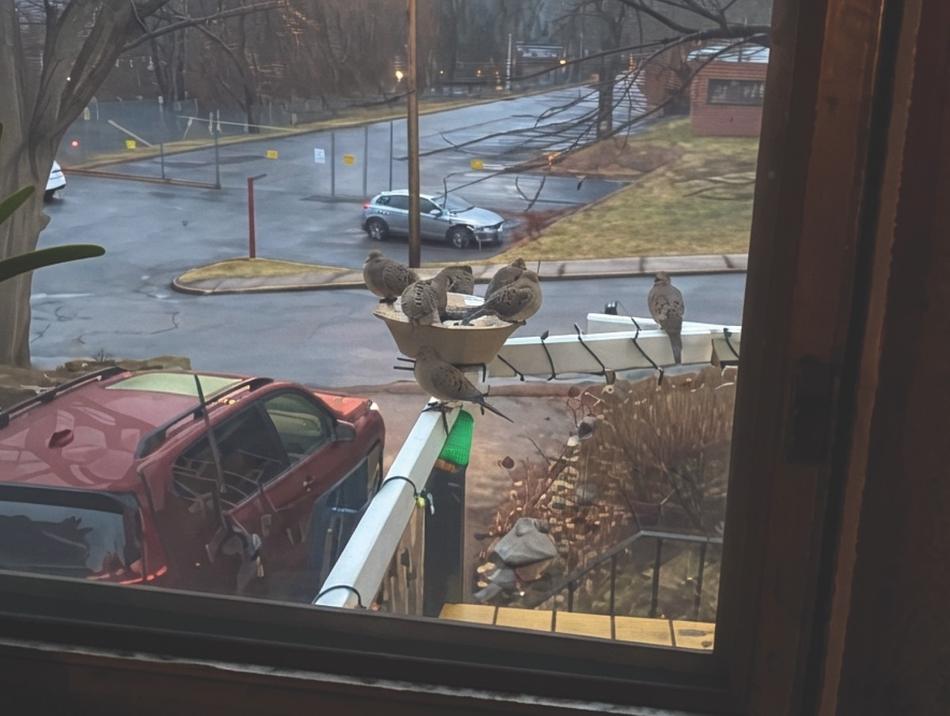
The household had kept a bird bowl on that rail for more than twenty years, and had heated it through the winter for the last three. They had never seen anything like it.
It was not the only account of its kind. A reader wrote in about her housecat: when she filled the upstairs bowl with treated water, the cat stopped drinking from its usual bowl in the basement. When she swapped them, moving the treated water downstairs, the cat abandoned the upstairs bowl and followed it down.
What both raise is whether living things can sometimes register a difference in water — in redox, in hydration — before our instruments are brought to bear on it. It is hard to forget: seven doves, in the middle of winter, around a bowl where none had gathered before.
Section eyebrow
A field that had given up
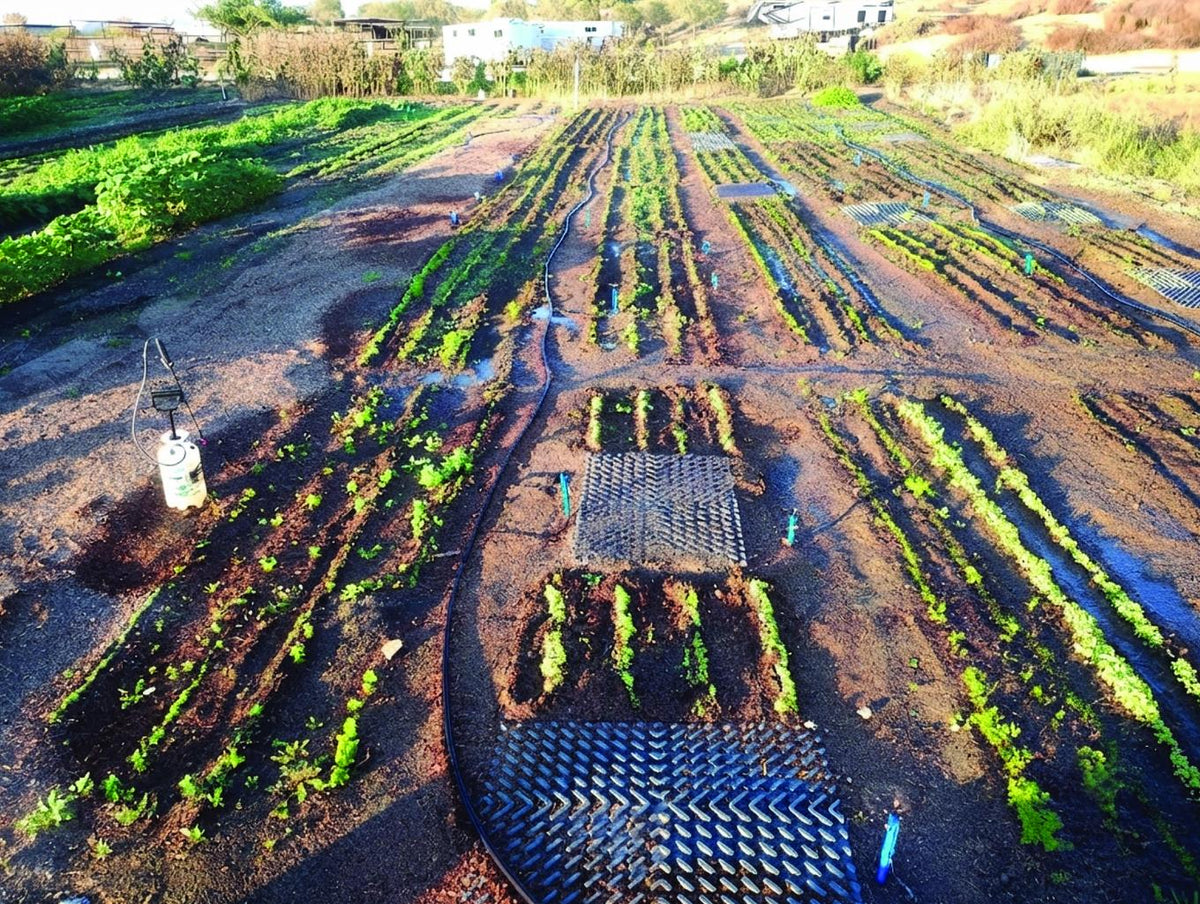
When he started, there were no earthworms. By the end of the season, there were.
Temecula is a semi-arid transition zone that looks favourable on paper and proves difficult in practice: low seasonal rainfall, hot desiccating summers, and old carbonate-heavy soils with little organic matter and fragile microbial life. It is not a low-mineral environment. It is a low-availability one. The minerals are there but locked — iron chlorosis shows up in iron-rich ground, magnesium and phosphorus get immobilised by carbonate chemistry, trace elements circulate poorly despite an abundant inventory.
He reported soil that was dry, dusty and biologically exhausted, with no detectable earthworm activity and little visible life beyond goat heads. Goat heads are a warning flag: they thrive where soil has been disturbed, its structure collapsed, its organic carbon lost. The one organism that was abundant was the cutworm, whose success signals that a field’s biology has fallen behind the pace the crop is being asked to grow at.

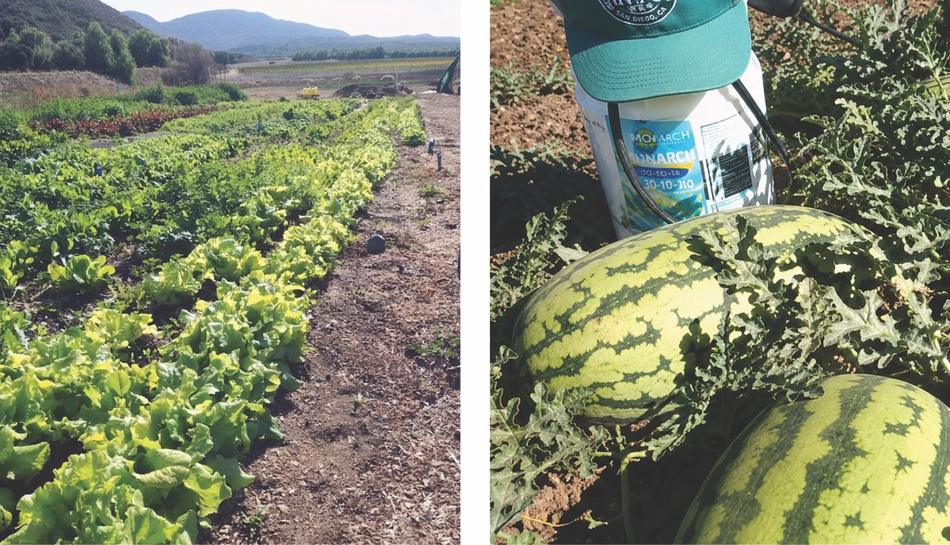
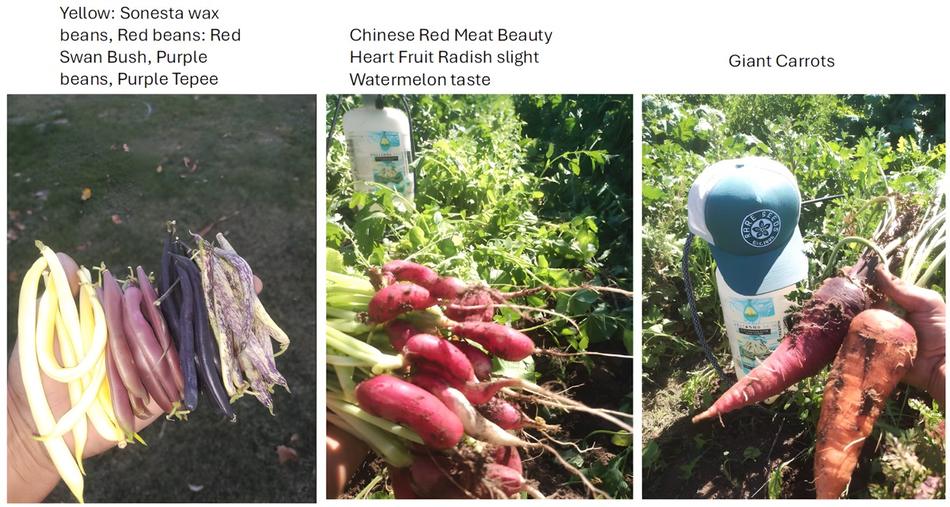
The intervention was essentially irrigation with mineral-treated water. No compost, no fertilizer program, no mineral blends, no aggressive inoculant. Early on the field behaved like degraded soil: poor vigour, high insect pressure, uneven growth. Then it shifted. The cutworms disappeared. Earthworms appeared and thrived. Pest pressure fell far enough that no pesticide was used. Roots established, plant architecture strengthened, leaf density and colour rose, and several vegetable varieties came on at once.
One row of cucumbers, left out
He withheld the mineral solution from his weekly foliar spray on a single row of cucumbers — an informal comparison against the treated crops beside them.
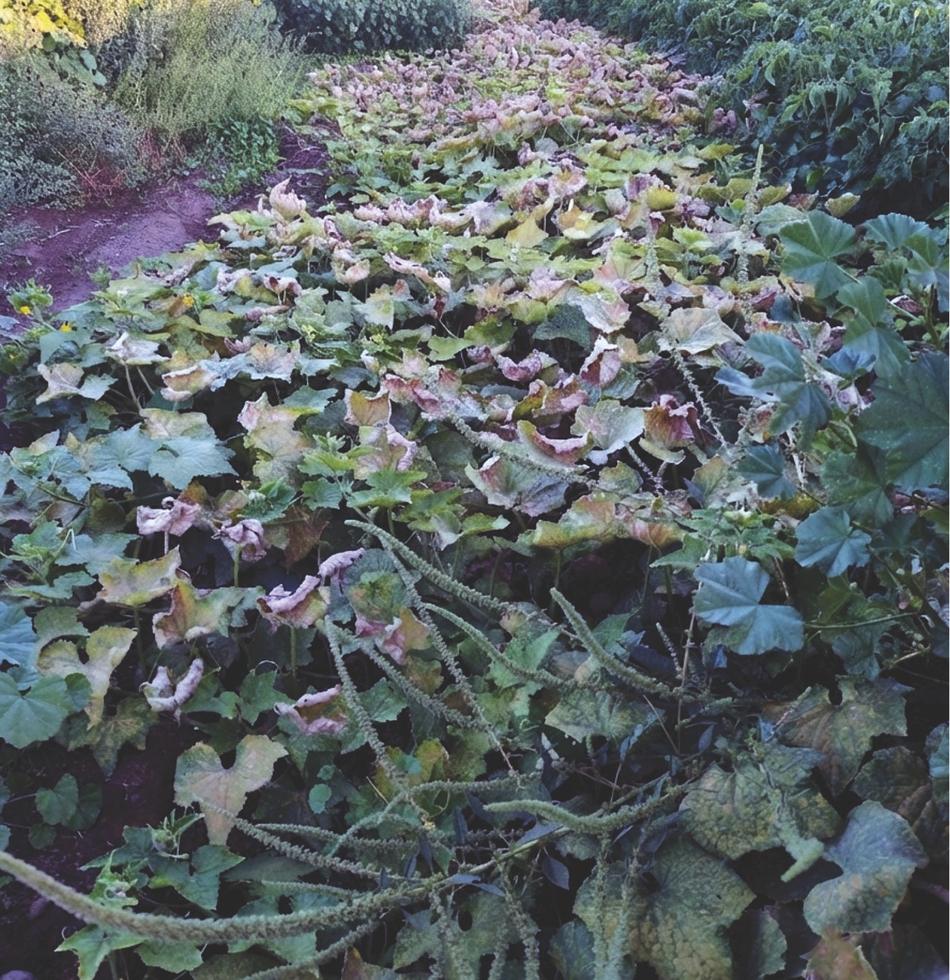
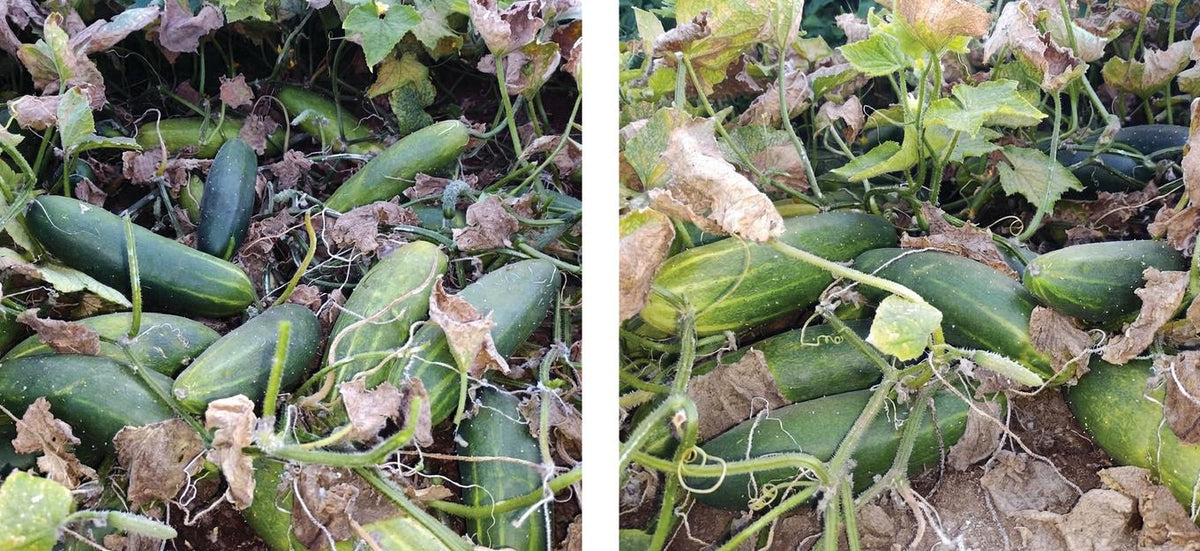
Where the nearby tomatoes were vivid green, the cucumber leaves were yellow-brown, curled and stressed, and mould appeared on the cucumbers while the tomatoes stayed clean. About half the cucumber crop never developed the colour he expected, and many were flavourless and spotted.
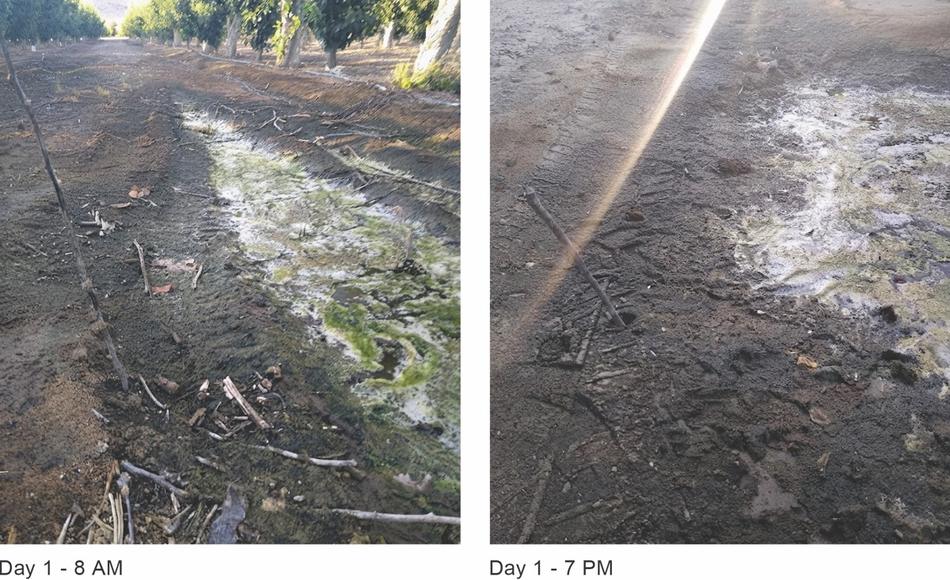
Standing irrigation water
The soil had not changed in the interval. Only the water entering it had.
After flood irrigation, well water had stood on this clay ground for roughly two weeks without draining — long enough to grow algae across the surface, a sign of how completely the sealed soil had stopped accepting it. He estimated the standing puddle at 100 to 200 gallons. He sprayed the surface with four gallons of well water into which he had mixed sixteen ounces of solution, the standard dose for treating about 125 gallons, so the amount applied was calibrated to roughly what was standing there. A stick marked the water level.
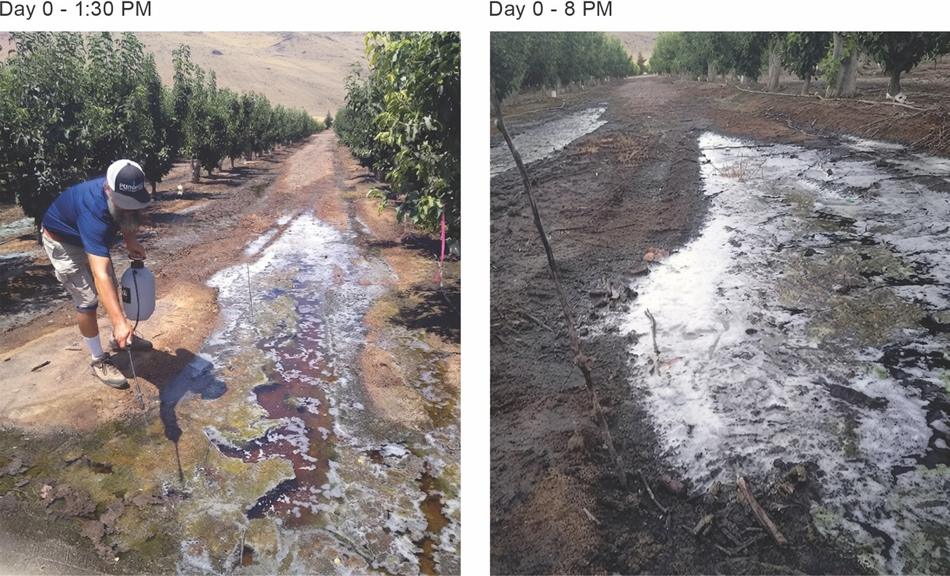
Within six hours the water had begun to penetrate visibly. By the following evening the ground had absorbed it almost completely.
Now the part with the study designs.
Everything above is a photograph and an account. The formal record — sixty-three studies, four realms, an evidence grade on every row — is on the evidence page, and the sources are open.